

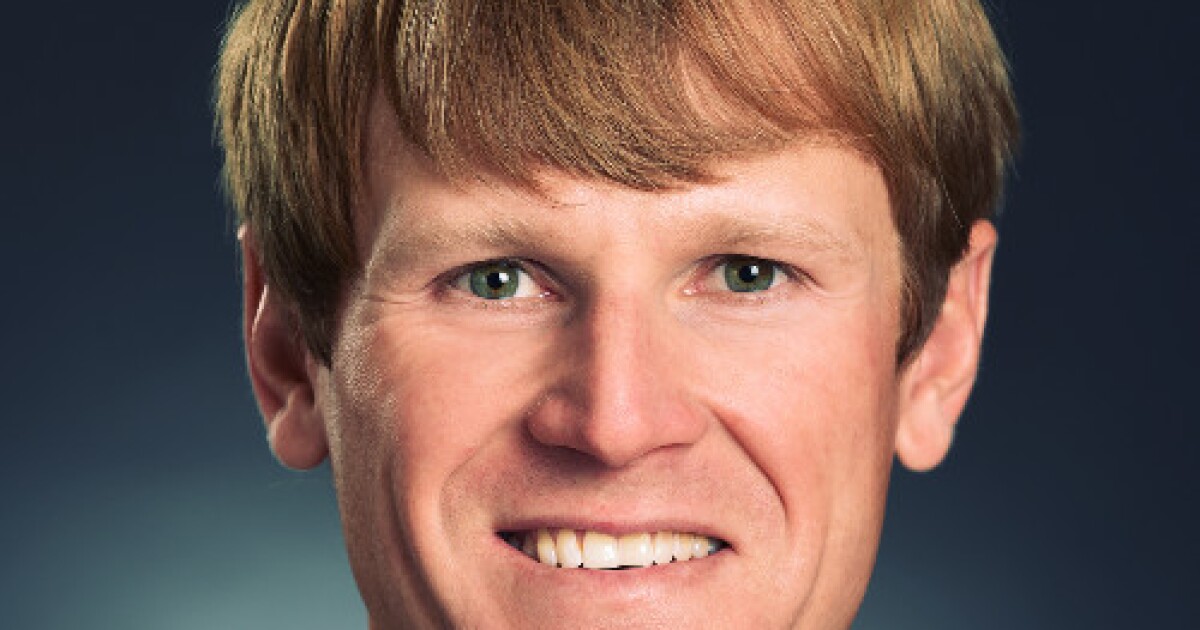
For a while, the biggest professional problem Brad Morgan faced was figuring out how to get toothpaste into a tube.
Processing Content
Before you chuckle …
“Believe it or not, pumping toothpaste is one of the most complicated phenomenons you’ll ever experience. It’s a fluid that, as you pump it faster, it gets thinner,” Morgan said. “So without going into great detail, I was working with MIT professionals, the smartest of the smartest on how we can pump toothpaste faster. That was my job.”

And Morgan enjoyed the job for a while, but it started to lose its luster after about seven years. Switching careers is not unheard of these days, but it was less common in Morgan’s family and for those who had latched onto a career at P&G, where profit-sharing arrangements meant that many employees could retire as millionaires.
“I was raised in a P&G family. My dad was an engineer there for 37 years, and his brother had 37 years there. My dad’s dad — my grandpa — was there 37 years as well. And then I met my wife there,” he said. “So lots of family history at the company.”
READ MORE:
Still, something called Morgan to consider another path. P&G’s retirement accounts and stock options can be complicated, but his expertise with them as a dabbler in financial planning and investing opened a door.
Within a few years, Morgan was able to get the education he needed to start serving clients, and P&G employees in his area around Cincinnati were a perfect opportunity.
These days, Morgan is with Savvy Wealth and has been an advisor for a decade. Between himself and an associate, he has about 100 clients, and he estimates 98% of them are P&G employees.
Financial Planning talked to Morgan about
Financial Planning: Lots of people you know were at P&G for 37 years. Is that a magic number at the company?
Brad Morgan: Yes. The company has a profit-sharing plan. We look at Apple and Google as the runners right now. That was P&G back in the day. The profit-sharing plan was designed to retain employees — golden handcuffs, so to speak.
After 10 years on the original retirement plan, you got 22% of your salary every year put in the plan in the form of P&G stock. So these guys were getting $50,000, $85,000 a year, depending on what level you are, shoved into your plan for free. It’s not a match. They’re just going to do it, and it’s all P&G stock, and they don’t allow you to diversify it until age 50.
Typically, we found that a line worker making $50,000 a year retires with $2 million of P&G stock. That is all P&G, and they’ve never sold it because they don’t know what to do with it. Anyone that started a P&G in the ’80s, ’70s, back in ’90s, they’re not leaving. They really can’t even make this kind of money anywhere else.
FP: But you left. Are you a black sheep in your family?
BM: Well, things change, right? And certainly the company’s changed.
The plan I was on was a private sharing contribution of up to 12%. I’m not complaining about that, but the company’s stock price has dwindled the past 15 years. So you’re getting P&G stock, then the retirement plan is not as great. If the stock’s going down all the time, you can’t sell it. So yes, I had to have some conversations when I left and people were like, “You worked here all your life. You have a master’s in mechanical engineering. You got the job that everyone wanted.” I’m like, “Guys, it’s not that anymore. It used to be that, it’s just not that anymore.”
FP: So, why financial planning?
BM: I was married. I didn’t have kids yet. And I was kind of like, “I don’t really love my job.” I had to figure out what to do, and I’d spent all my life in that direction. I thought about med school. I thought about moving into sales or marketing at P&G, which is probably the safest option for me. But I had always been interested in financial planning and investment management. It had always been my side hobby or passion.
I never knew that I could do it for a job, because when you go to college, they’re not like, “Hey, do you want to be a financial planner?” I have family in this business — just one cousin of mine, and he’s about 20 years older than me, and so I started talking with him. I was like, “Fred, what do you do?” And he started explaining to me, and I thought that sounded amazing.
I had to take a pretty sharp pay cut when I left. We got pregnant with twins like, a year later. So I was studying for my CFP, raising twins, trying to start a new client base and drinking from a fire hose. There were a couple years there where I was not sleeping much.
READ MORE:
FP: How did you prepare for serving a niche like this — one in which it’s your entire focus?
BM: I really focused the first two years on building a platform of knowledge. There’s a local attorney in Cincinnati that has done a really good job of capturing the estate planning portion of the P&G business. If you go ask any P&G employee who did their estate plan, there’s a good chance it’s this one guy.
So I looked at him and said, “He’s captured this market. How did he do it?” And what I could tell was he really had exceptional knowledge of the plans. He knew how to take care of the client. And he had a lot of information online. When you went to his website, there was so much information that was super helpful.
So I spent a lot of time writing white papers, creating an online repository of information that can help P&G clients with things they’re going through. I was getting my CFP, playing golf with people just to tell them what I was doing, get their opinion, their perspective. I wasn’t asking for business. I was asking for help. Just asking, “If you hired an advisor, what are some things you would look for?”
FP: How did you land the first official P&G clients?
BM: My first few clients were colleagues of mine that I was close to that already trusted me and knew that I wasn’t an idiot. From there, I started doing Facebook advertising. I was doing LinkedIn advertising, using all that material I created, but spinning it up on Facebook and targeting people across the country, specific to geography — if they’re near a plant or a tech center or, obviously, Cincinnati. I knew what they were thinking about, so I would write the ad and kind of try to pull on those heartstrings and get a lot of business.
FP: It sounds like the targeted ads worked well.
BM: About 13 or 14 years ago, I saw a Facebook ad that said, “Hey, are you a P&G-er? If so, we’ll give you a discount on your insurance.” I was like, “Hey, that’s pretty smart. I should do that.”
Obviously, you can’t take discounts in this industry, but we can target the audience. It took time. But three clients turns into 10, and then you get 20, and you get 40. When I started at my first firm, they had two P&G clients, and when I left, there were probably 225, 250. My current asset base is north of $300 million, and it’s been exponential growth.
We’re still doing the same things I was doing then. We’re still doing Facebook ads, and I was actually on a call yesterday with our marketing team, and they had like 45 leads that have come in the past three weeks from our Facebook ads. You have to share your email address to download content, and they’re telling me, “Hey, do you want to reach out to people?” I don’t, because when they’re ready, they’re going to reach out to me, and I’m going to keep dripping on them to allow them to understand what we do. I want to take care of my current clients and focus on them because they’re sending referrals. And if these leads are warm and they want to work with us, they’ll come to us. That’s my belief.
FP: You have all your eggs in one basket with P&G employees. Is that what you set out to do? And do you have any concerns about that?
BM: I will work selectively with non P&G clients. But if you bring in a brand-new business owner, and it’s going to take me five times the amount of time to understand their situation, I’m probably going to refer it out to someone else that is a better fit for that client. So I absolutely want to work only with P&G. I don’t see any reason not to focus on a niche. It makes my life better and the client’s life better.
READ MORE:
FP: What are some things that are unique to P&G employees that are planning challenges where your expertise comes into play?
BM: At varying levels in the company, there’s going to be a degree of complexity. P&G’s compensation plan is heavy with stock options, and depending on your level, you get stock options or issues, and you can choose a mixture of the two. So planning around that’s important.
RSUs vest in three years. But stock options are a much longer window of when that income is realized. Planning around that is huge, depending on your age and where you are in your career and the amounts of options you’re getting.
The profit-sharing plan itself I mentioned earlier — that 22% per year that they’re getting — that’s all held in P&G stock until a certain age when they can diversify down to 40%. If they have a $3 million [profit-sharing trust] plan when they retire, they probably have almost a million dollars in P&G stock. Net underwritten appreciation is a huge opportunity with that stock.
At distribution, at retirement, how do we handle that stuff? You look at their compensation plans, their benefit packages. They have a legal plan. They can get free legal services, free estate planning. So there’s a lot of other things that we plug into, but those are the main two things — stock option planning and then distribution planning with the community stock.
FP: Are there any challenges for you as a planner working with these folks?
BM: When I talk to a new prospect, I always tell them, “It’s great to work with P&G folks because I know who they are, and they’re just like me.” But the problem is, they’re just like me. They’re typically very, very particular.
P&G hires a specific personality. They give you a personality test before they hire you, and a lot of people fail because they are looking for that type A personality. So I can tell you, if I’m getting a referral and it’s a P&G engineer, I know exactly what I’m walking into. There’s going to be a million questions. They’re going over every single detail, but they’re the type of people, if you stick with them and you actually break down and give them what they want to hear and spend time with them, you’re doing something no one else has done for them, and they will become raving fans. They will become fantastic clients.
Some of those engineers have become best friends of mine, just because of the level of trust you’ve been able to create. If you get a P&G marketing executive — exact opposite. They don’t want to talk to you. “Just do it for me, you know, make me money. Don’t call me unless something’s on fire, right?” So, you kind of get to know the personalities.
FP: What advice would you give someone who is considering developing a niche for their firm?
BM: Patience. The biggest thing is patience.
People come into this industry and want to snap their fingers and have whatever they want. That’s just not how it works. If you don’t have a firm behind you that’s willing to pay you with patience, you’ve got to figure out how to do it. You might have to run a certain client base on the side, just to keep feeding your family. But you have to focus on that niche, and you have to keep plugging into it.
Make sure that niche has a big enough pond of fish. P&G is unique because there are 20,000-plus people here in Cincinnati that all have millions of dollars. So, start out, do the basics, right? Whatever that is for you, if that is steak dinners, that’s fine. That wasn’t how I did it, but that might be how you do it. But you have to do it for three to five years. You can’t expect this snowball to accumulate in a season.
